
Three-Dimensional Hospitality
What true Christian hospitality looks like


Friendship with vulnerable people can challenge the way we think about hospitality.
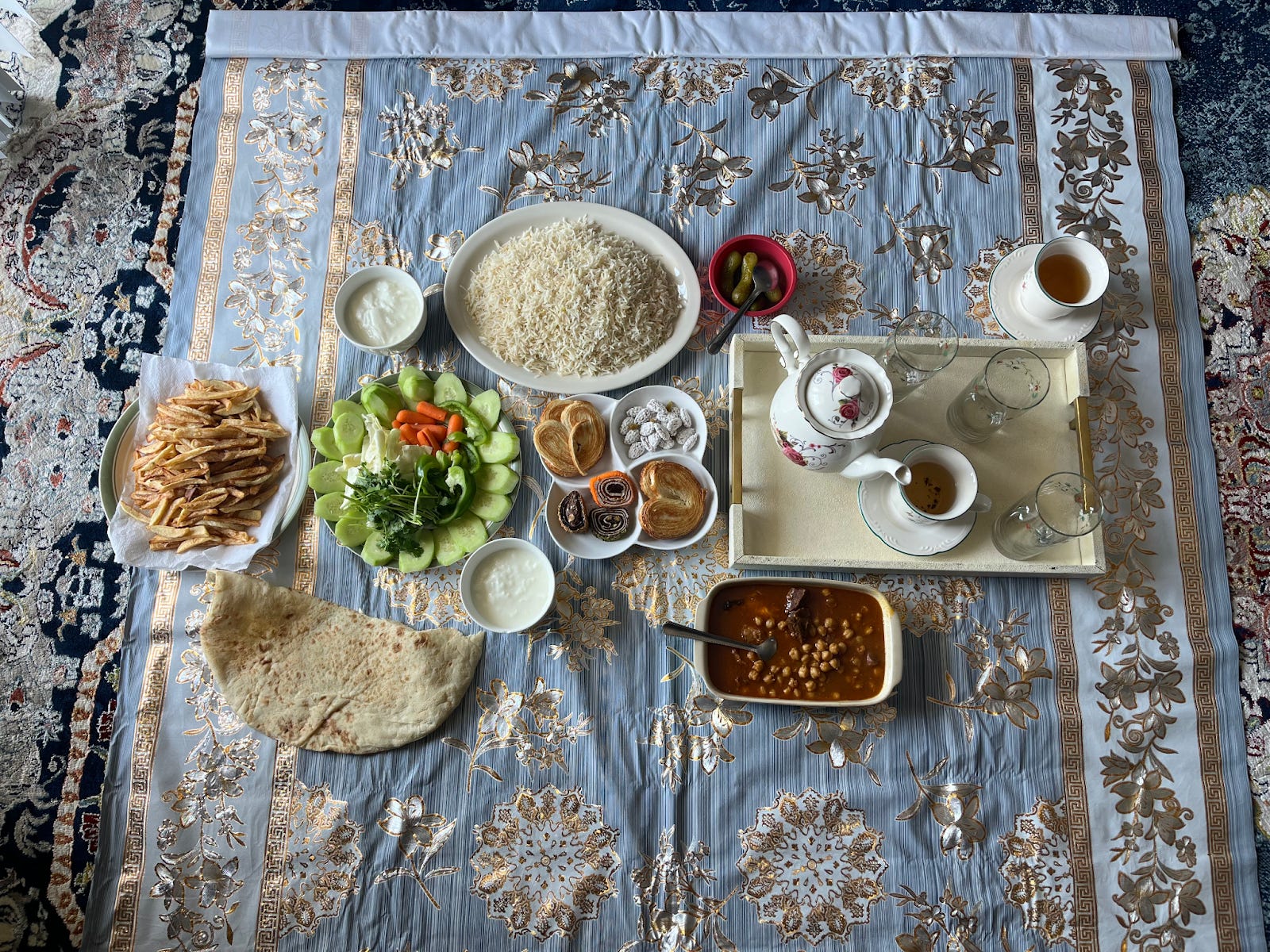
Recently I had lunch in the home of an Afghan friend (photo below). This lovely woman is part of the Afghan Women’s Bike Team, an offshoot of Ride with Refugees, which I founded 5 years ago and still direct today. She told me her story of fleeing from Afghanistan soon after the Taliban takeover in 2021, of how a kind benefactor bought her family plane tickets to Brazil, of how she then made the grueling trek to the US border by bus, car, train, and foot. At the border, her family requested asylum, was detained, and finally made it to Houston. This blog post doesn’t grant me the space to share more details of her story, but I was in tears by the end.
In the past 15 years of my involvement in refugee ministry, I can say humbly that although I am an educated US-born citizen, I do not always feel like I have much to offer refugees. The hurdles to refugees’ integration are overwhelming, even when they do speak English and have case management. Over the past year and a half, with the current administration drastically cutting funds, services, and protections to vulnerable refugees, many are left in limbo. It’s easy to feel helpless, like you have nothing to offer.
And then I’m reminded that my friendship, based on multiple acts of hospitality, is not a two-way interaction between me and a “needy” refugee. In fact, true Christian hospitality is Trinitarian, with the Lord himself seated in the invisible third seat. If I invite someone to my home, I am not “the host”—the Lord is. When the Lord is the host, the other parties are guests to the Lord. In that manner, our interaction is really a three-way exchange, with each member taking turns giving and receiving.
True Christian hospitality is Trinitarian.
I love this Trinitarian image of hospitality because it underscores our position before God and humanity: we are always in a place of dependence upon him and others. Our education, birthright, and wealth don’t give us any extra position of power or worth, though worldly standards may deceive otherwise. In God’s eyes, we are equals, each needing the other in a posture of humility, and each equal recipients of God’s abundant grace.
Yes! So good… and so much to learn from the immigrant and refugee. Thank you! 🙏